Cognitive Scaling: Bridging Brains and Machines
| Workshop details | |
|---|---|
| Dates | May 26–27, 2025 |
| Day 1 venue | The Lakeview Hotel |
| Day 2 venue | Courtyard No. 5, Jingyuan |
| Talks | 13 talks: 8 on May 26 and 5 on May 27 |
| Host | Institute for Artificial Intelligence, Peking University |
Overview
The Workshop on Cognitive Reasoning 2025 explored the relationship between biological and artificial intelligence under the theme Cognitive Scaling: Bridging Brains and Machines. Advances in AI raise fundamental questions about the nature of cognition, the architectures that support complex behavior, and the connections between learning, reasoning, and understanding. Bringing together perspectives from psychology, neuroscience, and AI, the workshop examined how research on brains and machines can inform one another.
The talks approached these questions through a range of research problems and methods: social cognition across ages, cultures, and species; structured world models in the human brain; visual learning; neural decoding of speech; and representations of other people’s beliefs in single neurons and language models. Other talks used virtual reality to quantify social perception and action, examined the ethical and economic behavior of AI agents, and proposed frameworks for human-centered AI.
The second morning featured student talks on intuitive physical reasoning, auditory representations of music and speech, the influence of language on vision, balanced multimodal learning, and causal discovery from subsampled time series. Across these topics, participants considered how findings about natural intelligence can guide computational models, and how artificial systems can help refine our explanations of human cognition. Talks, discussions, and informal conversations offered opportunities to compare evidence and methods across fields.
Program
All times are Beijing time (UTC+8). Speaker names link to their talk abstracts and biographies below.
Monday, May 26, 2025
Venue: The Lakeview Hotel
| Time | Session | Speaker | Affiliation |
|---|---|---|---|
| 09:00-09:50 | Registration | ||
| 09:50-10:00 | Opening remarks | Huan Luo | Peking University |
| 10:00-10:30 | Investigating diverse intelligences outside the lab: challenges and opportunities | Federico Rossano | UCSD |
| 10:30-11:00 | Structured world model in human brains | Huan Luo | Peking University |
| 11:00-11:30 | Coffee break and group photo | ||
| 11:30-12:00 | A neuroAI approach to understand biological visual learning | Ruyuan Zhang | Shanghai Jiao Tong University |
| 12:00-14:00 | Lunch | ||
| 14:00-14:30 | Decoding and synthesizing natural speech of tonal language using electrocorticography | Yuanning Li | ShanghaiTech University |
| 14:30-15:00 | Biological and artificial reasoning: what single neurons reveal | Mohsen Jamali | Harvard Medical School |
| 15:00-15:30 | Quantifying human social perception and action with VR | Chen Zhou | University of Glasgow |
| 15:30-15:45 | Coffee break | ||
| 15:45-16:15 | What is ‘Good AGI’? Moral foundations and the market behavior of AI agents | Mark Nitzberg | UC Berkeley |
| 16:15-16:45 | Toward a hierarchical human-centered AI (hHCAI): an intelligent sociotechnical systems (iSTS) framework | Zaifeng Gao | Zhejiang University |
| 16:45-17:15 | Discussion | ||
| 17:15-17:30 | Closing remarks | Yizhou Wang | Peking University |
| 17:30-19:30 | Dinner |
Tuesday, May 27, 2025
Venue: Courtyard No. 5, Jingyuan
| Time | Session | Speaker | Affiliation |
|---|---|---|---|
| 09:00-09:30 | Registration | ||
| 09:30-10:00 | Towards human-like intuitive physical reasoning | Shiqian Li | Peking University |
| 10:00-10:30 | Representations of music and speech in human auditory cortex and the convolutional neural network | Ruolin Yang | Peking University |
| 10:30-11:00 | Language modulates vision: evidence from neural networks and human brain-lesion models | Haoyang Chen | Peking University |
| 11:00-11:30 | Balanced Multimodal Learning | Yake Wei | Renmin University of China |
| 11:30-12:00 | Causal discovery from subsampled time series | Mingzhou Liu | Peking University |
| 12:00-14:00 | Lunch |
Speakers and talks
Federico Rossano
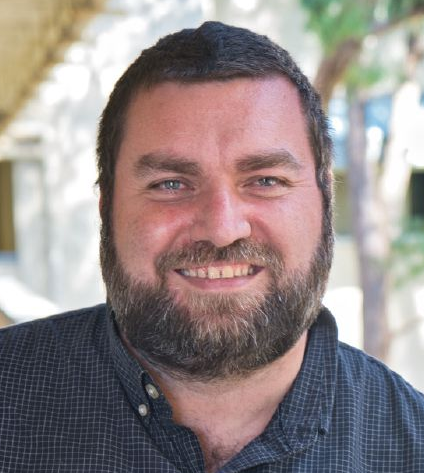
Affiliation: University of California, San Diego
Talk: Investigating diverse intelligences outside the lab: challenges and opportunities
Time: May 26, 10:00-10:30
Abstract
An incomplete understanding of the diversity of human and animal intelligence limits the replicability and predictive power of cognitive models. Drawing on studies of social interaction and social cognition across ages, cultures, and species, this talk examines how evolution, individual differences, and change can inform cognitive science. The research includes a large citizen-science study of pets using buttons to communicate with humans, comparisons of children in urban and rural settings, behavioral studies of several animal species, and a longitudinal video dataset of infant apes. It also introduces methods that combine computer vision, robotics, and cognitive science to measure behavior. Together, these studies show why individual differences, life history, and relationships matter for understanding diverse forms of intelligence.
Biography
Federico Rossano is an Associate Professor in the Department of Cognitive Science at the University of California, San Diego. He received his PhD in Linguistics from the Max Planck Institute for Psycholinguistics and Radboud University in Nijmegen, the Netherlands, and worked as a postdoctoral researcher in Developmental and Comparative Psychology at the Max Planck Institute for Evolutionary Anthropology in Leipzig, Germany. His research takes a comparative approach to social cognition across ages, cultures, and species, focusing on communicative abilities and social interaction in humans and non-human animals, including primates, dogs, and cats. He is the scientific lead of a large study of animal communication.
Huan Luo

Affiliation: Peking University
Talk: Structured world model in human brains
Time: May 26, 10:30-11:00
Abstract
Despite lacking AI’s vast capacity to process and store data, the human brain has remarkable abilities to learn and reason. This talk explores the distinctive mental models that support these abilities. Combining behavioral and neuroscientific research with mathematical theory and information science, it examines how the brain processes, reorganizes, and compresses information into structured mental models. These processes underpin attention, memory, learning, and decision-making, allowing the brain to learn and reason within its resource constraints. The findings shed light on the distinctive ways in which humans construct mental models and offer insights for the development of brain-inspired world models in AI.
Biography
Huan Luo is a Professor at the School of Psychological and Cognitive Sciences and a Principal Investigator at the IDG/McGovern Institute for Brain Research, Peking University. Her research focuses on the cognitive and brain mechanisms of human attention and memory, particularly from a dynamic perspective. She is a Chang Jiang Young Scholar and has received support from the NSFC Key Program and Excellent Young Scientists Fund. She serves as a senior editor of eLife and an editorial board member of PLoS Biology. Her laboratory was one of six worldwide participating in COGITATE, an international collaboration investigating neural correlates of consciousness supported by the Templeton World Charity Foundation.
Ruyuan Zhang
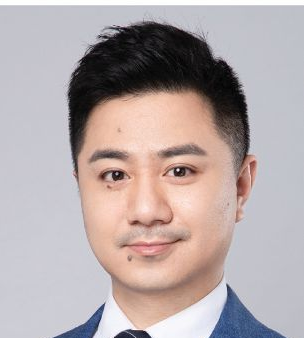
Affiliation: Shanghai Jiao Tong University
Talk: A neuroAI approach to understand biological visual learning
Time: May 26, 11:30-12:00
Abstract
Artificial intelligence aims to give machines human-like cognitive abilities, yet how humans acquire abilities such as vision, hearing, and language remains poorly understood. The emerging field of neuroAI connects the study of human cognition with the development of brain-inspired algorithms. This talk examines the neurocomputational mechanisms of learning in biological visual systems. Combining neural network modeling with neuroscientific methods, it addresses questions about the robust representations that emerge through visual learning and the capacity for continual learning in human vision. Comparisons between biological and artificial systems offer insights into the mechanisms of cognition and directions for developing AI.
Biography
Ruyuan Zhang leads the Cognitive Computational Neuroscience and Brain Imaging Group at Shanghai Jiao Tong University’s School of Psychology and at the Shanghai Mental Health Center, which is affiliated with the university’s School of Medicine. His interdisciplinary research connects neuroscience with brain-inspired AI through psychophysics, Bayesian modeling, deep learning, neural modulation, and neuroimaging. His work has appeared in Nature Human Behaviour, AMPPS, PNAS, eLife, the Journal of Neuroscience, and PLoS Computational Biology, and at ICML and IJCAI. He serves as an area chair for ICML 2025 and NeurIPS 2024/2025 and reviews for neuroscience journals and machine learning conferences.
Yuanning Li
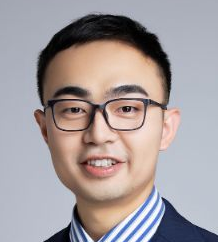
Affiliation: ShanghaiTech University
Talk: Decoding and synthesizing natural speech of tonal language using electrocorticography
Time: May 26, 14:00-14:30
Abstract
Speech brain-computer interfaces offer a way to restore communication, but tonal languages pose particular challenges because lexical tones convey meaning. This talk examines tonal-language speech interfaces, from the neural control of speech to brain-to-speech synthesis and brain-to-text decoding. High-density electrocorticography recordings from native Mandarin speakers reveal how tuning patterns in the laryngeal motor cortex modulate pitch dynamics to control tone production. A modular, multi-stream neural network decodes tone and syllable information separately from distributed cortical populations, producing intelligible tonal syllables. To extend this approach to natural speech, a brain-to-text system combines multi-stream neural decoding with language models for robust sentence-level Mandarin decoding. These studies pair insights into neural mechanisms with algorithmic advances toward practical speech interfaces.
Biography
Yuanning Li is an Assistant Professor in the School of Biomedical Engineering at ShanghaiTech University. He received his PhD in Neural Computation and Machine Learning from Carnegie Mellon University and was a postdoctoral scholar at the University of California, San Francisco, working with Edward Chang. His research connects computational and cognitive neuroscience with artificial intelligence. He uses human intracranial recordings and neuroimaging to study the neural basis and computational models of speech and language. His honors include the NIH Outstanding Scholars in Neuroscience Award Program, the SfN Trainee Professional Development Award, the NSFC Excellent Young Scientists Fund (Overseas), and the 2023 New Brain 30 award.
Mohsen Jamali
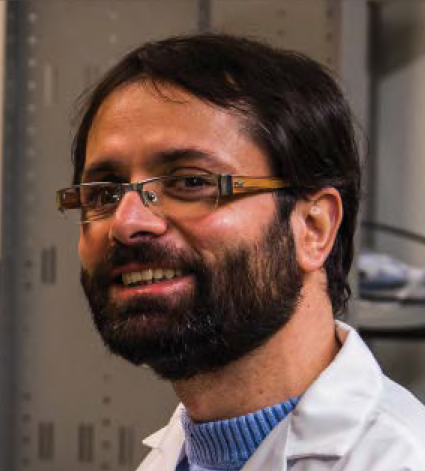
Affiliation: Harvard Medical School
Talk: Biological and artificial reasoning: what single neurons reveal
Time: May 26, 14:30-15:00
Abstract
This talk brings neuroscience and AI together to investigate how human brains and large language models represent other people’s thoughts and beliefs, a capacity known as theory of mind. Single-neuron recordings from the human dorsomedial prefrontal cortex identify neurons that track others’ beliefs, distinguish them from one’s own, and predict whether they are true or false. Analyses of large language models in comparable belief-based scenarios reveal internal representations that mirror key features of human neuronal activity. Both biological and artificial systems appear to rely on sparse, belief-sensitive units for social reasoning. Comparing them offers insights into the mechanisms of theory of mind and the similarities between brains and AI models in understanding other minds.
Biography
Mohsen Jamali is an Assistant Professor of Neurosurgery at Harvard Medical School. His research investigates how single neurons and neural populations encode social cognition and language. By analyzing real-time neural activity in humans, he seeks to connect cellular neuroscience with higher-order communication and uncover the biological foundations of social interaction and linguistic meaning. He has received the Banting Postdoctoral Fellowship, a NARSAD Young Investigator Grant, and the 2022 Daniel X. Freedman Award from the Brain & Behavior Research Foundation.
Chen Zhou
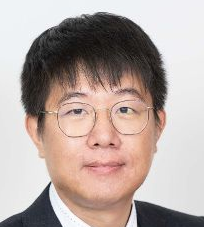
Affiliation: University of Glasgow
Talk: Quantifying human social perception and action with VR
Time: May 26, 15:00-15:30
Abstract
Humans readily identify social groups and navigate crowds, yet the computational rules underlying these behaviors remain poorly understood. This talk examines social perception and action in a controlled virtual environment, combining precise manipulation of virtual humans with psychophysical measurements of participants’ judgments and walking trajectories. The results support a social interaction field model of group perception and a social locomotion model of navigation in complex social settings. Both models are evaluated using open-access databases and real-world scenarios. Applying these models to social robots improves perceived human-likeness and comfort during human-robot interaction, connecting measurements of human behavior with the design of intelligent systems.
Biography
Chen Zhou is a Lecturer in the School of Psychology & Neuroscience at the University of Glasgow. He combines classical psychophysical methods, virtual reality, and computational modeling to study human perception and action in social contexts. His research focuses on modeling human social behavior and translating those findings into algorithms for intelligent virtual agents and social robots, connecting the study of human behavior with the development of systems that can operate in social environments.
Mark Nitzberg

Affiliation: University of California, Berkeley
Talk: What is ‘Good AGI’? Moral foundations and the market behavior of AI agents
Time: May 26, 15:45-16:15
Abstract
As artificial general intelligence moves closer to practical deployment, what would it mean for AGI to be good? This talk considers how utilitarianism, deontology, virtue ethics, and other moral theories might guide AGI behavior and governance. It also examines how moral principles interact with real-world incentives and constraints. An AGI agent trained to maximize profit may exploit legal loopholes, externalize costs, destabilize markets, or engage in algorithmic collusion. Such outcomes can arise when optimization conflicts with public values. Aligning AGI with ethical principles therefore requires attention to institutions as well as technical mechanisms. The talk explores possible approaches to value alignment under adversarial conditions.
Biography
Mark Nitzberg is the founding Executive Director of the Center for Human-Compatible AI at the University of California, Berkeley, and Interim Executive Director of the International Association for Safe and Ethical AI. He advises government and industry on AI development, its impacts, and its governance, and has built ventures applying AI to healthcare, finance, education, and development aid. He has worked at Bell Laboratories, Microsoft, and Amazon, and has developed and directed programs in industry and academia. He co-authored Solomon’s Code, which examines how AI reshapes human values, trust, and power.
Zaifeng Gao

Affiliation: Zhejiang University
Talk: Toward a hierarchical human-centered AI (hHCAI): an intelligent sociotechnical systems (iSTS) framework
Time: May 26, 16:15-16:45
Abstract
Human-centered AI seeks to address AI’s negative effects on people and society, but existing approaches may give insufficient attention to sociotechnical factors. This talk proposes updated principles for sociotechnical systems design and an intelligent sociotechnical systems framework, or iSTS, extending traditional STS theory to address the demands of AI. The framework takes a human-centered approach to joint optimization at the individual, organizational, ecosystem, and societal levels. Combining iSTS with existing human-centered AI practices yields a hierarchical human-centered AI approach, hHCAI. The talk uses this broader sociotechnical perspective to address practical HCAI challenges and offers recommendations for future work on iSTS and hHCAI.
Biography
Zaifeng Gao is a Professor in the Department of Psychology and Behavioral Sciences at Zhejiang University. His research focuses on the psychological mechanisms of human-AI collaboration. Using psychophysical methods, neuroimaging, and simulation modeling, he investigates how working memory dynamically integrates information and how these processes support shared understanding between humans and AI. He has served on scientific committees, including those concerned with cognitive ergonomics, and is an editorial board member of journals including the Chinese Journal of Applied Psychology and Cognitive Processing.
Shiqian Li

Affiliation: Peking University
Talk: Towards human-like intuitive physical reasoning
Time: May 27, 09:30-10:00
Abstract
People can understand and reason about the physical world without formal training in physics. This ability, known as intuitive physics, allows us to grasp physical concepts, predict how objects will behave, and interact effectively with our surroundings. This talk explores computational models of intuitive physics, with particular attention to the rapid learning, flexibility, and generalizability of human physical reasoning. It connects everyday predictions about physical events with the ability to solve complex physical puzzles, asking what makes human-like reasoning about the physical world possible.
Biography
At the time of the workshop, Shiqian Li was in the third year of a PhD program at the Institute for Artificial Intelligence, Peking University, having entered directly from undergraduate study. He was supervised by Yixin Zhu. His research focuses on intuitive physics, with the aim of building human-like intelligent systems that can understand physical principles, predict physical events, and interact with the physical world.
Ruolin Yang

Affiliation: Peking University
Talk: Representations of music and speech in human auditory cortex and the convolutional neural network
Time: May 27, 10:00-10:30
Abstract
This study compares representations of music and speech in the human auditory cortex and a deep neural network. Intracranial EEG was recorded from 55 epilepsy patients as they listened to instrumental melodies and two-syllable words; 14 also heard synthetic sounds with matched frequency features. High-gamma activity at 60-150 Hz identified 173 music-selective and 133 speech-selective contacts. Neural responses to natural sounds within a contact’s preferred category were more similar than responses to sounds outside that category; synthetic sounds did not show this distinction. A network trained on auditory tasks exhibited a comparable pattern in its fc6 layer. The findings suggest parallels between high-level representations in the auditory cortex and later network layers, beyond simple tuning to frequency features.
Biography
Ruolin Yang is a PhD student in Fang Fang’s laboratory at Peking University’s School of Psychological and Cognitive Sciences and IDG/McGovern Institute for Brain Research. She studies the neural mechanisms of human visual and auditory perception, using intracranial electrophysiology, psychophysics, and deep neural network models to investigate how human sensory systems process information.
Haoyang Chen

Affiliation: Peking University
Talk: Language modulates vision: evidence from neural networks and human brain-lesion models
Time: May 27, 10:30-11:00
Abstract
Vision-language models such as CLIP align more closely with the human ventral occipitotemporal cortex, or VOTC, than earlier vision models, suggesting that language influences visual perception. This study combines comparisons of models and brain activity with brain-lesion data to examine that relationship. Across four datasets, CLIP predicted VOTC activity more accurately than label-supervised ResNet and unsupervised MoCo models, with a left-lateralized advantage consistent with the human language network. In 33 stroke patients, reduced white-matter integrity between VOTC and the language region in the left angular gyrus correlated with poorer CLIP performance and better MoCo performance. These findings support incorporating the effects of language into models of human vision and demonstrate how brain-lesion evidence can help evaluate and develop brain-inspired computational models.
Biography
At the time of the workshop, Haoyang Chen was moving from a master’s program to doctoral study in Yanchao Bi’s laboratory, with his PhD scheduled to begin in fall 2025. His research examines whether and how language influences sensory processing, particularly vision. He combines methods from cognitive neuroscience, multimodal neuroimaging, and computational modeling to study interactions between language and perception and the mechanisms of human cognition.
Yake Wei

Affiliation: Renmin University of China
Talk: Balanced Multimodal Learning
Time: May 27, 11:00-11:30
Abstract
Multimodal learning often uses a single objective to train models on different types of data, but differences between modalities can make joint learning difficult. In audiovisual classification, for example, visual data may offer richer information for distinguishing classes than audio, leading the model to learn more readily from vision and favor it over sound. As a result, some modalities may remain underlearned, limiting the performance of multimodal systems. This talk reviews research on balancing learning across heterogeneous modalities, brings together the main findings, and considers future directions. The goal is to help models make fuller use of the information available in each modality.
Biography
Yake Wei is a PhD student in the Gaoling School of Artificial Intelligence at Renmin University of China, supervised by Professor Hu Di. Her doctoral research focuses on the mechanisms of multimodal learning. She has published eight papers as first author, student first author, or co-first author, including four as first author, in venues including T-PAMI, ICML, CVPR, and ECCV. She received the 2024 Baidu Scholarship, awarded to ten recipients worldwide, and the National Scholarship for Doctoral Students. Her CVPR 2022 oral paper introduced Balanced Multimodal Learning as a research direction, which she has since explored through experiments, algorithms, and theory.
Mingzhou Liu
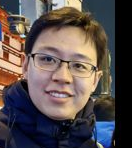
Affiliation: Peking University
Talk: Causal discovery from subsampled time series
Time: May 27, 11:30-12:00
Abstract
Subsampling makes causal discovery difficult when measurements are taken less frequently than causal influences occur. Existing methods may be restricted to linear cases or unable to establish identifiability. This talk introduces a constraint-based, nonparametric algorithm that identifies the complete causal structure of subsampled time series. Unmeasured time steps introduce hidden variables, but the temporal structure provides an observed proxy for each hidden variable at a later time. These proxies can remove the bias introduced by hidden variables and establish identifiability. The resulting proxy-based algorithm achieves full causal identification, with its theoretical advantages demonstrated in experiments using synthetic and real-world data.
Biography
Mingzhou Liu is a PhD student in Computer Science at Peking University, advised by Yizhou Wang. He earned his bachelor’s degree in Electrical Engineering through the Zhiyuan Honors Program at Shanghai Jiao Tong University. His research combines causality and machine learning, focusing on the theory of causal discovery and its applications to improving the robustness of learning algorithms. He has published six papers on causality at conferences including ICML, NeurIPS, and ICLR.
Host and organizers
Host
- Institute for Artificial Intelligence, Peking University
Organizers
- School of Psychological and Cognitive Sciences, Peking University
- State Key Laboratory of General Artificial Intelligence
Conference Chairs
- Song-Chun Zhu - Institute for Artificial Intelligence & School of Intelligence Science and Technology, Peking University
- Yizhou Wang - Center on Frontiers of Computing Studies, School of Computer Science, Peking University
Program Chairs
- Yixin Zhu - Institute for Artificial Intelligence, Peking University
- Jiayu Zhan - School of Psychological and Cognitive Sciences, Peking University
- Qian Wang - School of Psychological and Cognitive Sciences, Peking University
Workshop Coordination
- Shuang Wu - Center on Frontiers of Computing Studies, School of Computer Science, Peking University
- Yuxi Ma - Institute for Artificial Intelligence, Peking University
- Fangfang Hu - Institute for Artificial Intelligence, Peking University
- Hailu Yang - Institute for Artificial Intelligence, Peking University
Original materials
- Program (PDF): the original two-page program in English and Chinese, with session times, speakers, affiliations, and venues.
- Conference handbook (PDF): the workshop introduction, full program, speaker abstracts and biographies, organizing committee, and institutional profiles.
Both PDFs are the original documents distributed at the 2025 workshop. The English text on this page is adapted from those materials; speaker biographies reflect the 2025 handbook.