The Origins of Cognition: From Core Knowledge to Machine Minds
认知的起源:从核心知识到机器心智
| Workshop details | |
|---|---|
| Dates | October 17–18, 2026 |
| Day 1 | Saturday, October 17 (full day) |
| Day 2 | Sunday, October 18 (morning) |
| Venue | Jixian Hall, Zhongguanyuan Global Village, Peking University(北京大学中关新园·集贤厅) |
| Talks | 9 talks in 4 sessions: 6 on October 17 and 3 on October 18 |
| Also | 3 poster sessions and a panel discussion |
Overview
Where does cognition come from? Infants are not blank slates. They begin life with core knowledge of objects, places, number, and people, and they extend this knowledge through language and social interaction as the brain develops. The origins of mind also bear on machine minds: what starting points, experiences, and architectures does flexible intelligence require, and which of them could an artificial system share?
The first session, Origins of Mind: Core Knowledge and the Developing Brain, asks what core knowledge systems are and how they work together, and how language builds on a neural scaffold already present in infancy and develops through interaction with others. The second, Minds in Interaction: Cross-Species Communication and Human Conversation, considers what counts as evidence that a species has a cognitive ability and how wording and timing shape difficult conversations between physicians and patients. The third, Bridging Brains and Machines: The Social Brain, Deep Models, and Brain Foundation Models, examines how the human brain manages the complexity of social life and how brain-computer interface foundation models, pretrained on large-scale brain data, learn representations that can be reused across individuals and tasks. The fourth, Consciousness, Perception, and Brain Networks, asks whether perceptual metacognition in the prefrontal cortex sets conscious human perception apart from feedforward deep networks, how networks from fly brains to human societies compute value, and how feedback and attention contribute to visual awareness.
CoRe 2026 is the third Workshop on Cognitive Reasoning. The first two editions took as their themes Bridging Minds (2024) and Cognitive Scaling: Bridging Brains and Machines (2025). The one-and-a-half-day program of nine talks, three poster sessions, and a closing panel discussion brings together researchers in psychology, neuroscience, and artificial intelligence. We hope it will help connect experimental evidence with computational models and identify questions that call for collaboration across fields.
会议主旨
认知从何而来?婴儿并非一张白纸:他们生来具备关于物体、地点、数量与他人的核心知识,并随着大脑发育,借助语言与社会互动不断拓展。心智的起源也关乎机器心智:灵活的智能需要怎样的起点、经验与架构?其中哪些可为人工系统所共有?
第一单元“心智的起源:核心知识与发育中的脑”探讨核心知识系统是什么、如何协同,以及语言如何依托婴儿期已有的神经支架,在人际互动中发展。第二单元“互动中的心智:跨物种交流与人类会话”讨论何种证据能表明一个物种具备某种认知能力,以及措辞与时机如何影响棘手的医患对话。第三单元“脑与机器:社会脑、深度模型与脑基础模型”考察人脑如何驾驭复杂的社会生活,以及用大规模脑数据预训练的脑机接口基座模型如何习得可跨个体、跨任务复用的表征。第四单元“意识、知觉与脑网络”追问前额叶的知觉元认知是否使人类意识知觉有别于前馈深度网络,从果蝇大脑到人类社会的网络如何计算价值,以及反馈与注意如何参与视觉意识的形成。
CoRe 2026是第三届北京大学认知推理日,前两届主题分别为“跨越心智的桥梁”(2024年)与“认知规模扩展:桥接人脑与机器”(2025年)。为期一天半的会议包括九场报告、三场海报交流和闭幕前的专题讨论,汇聚心理学、神经科学与人工智能领域的研究者。我们希望借此连接实验证据与计算模型,找出需要跨领域合作的问题。
Program
All times are Beijing time (UTC+8). Speaker names link to their talk abstracts and biographies below.
Saturday, October 17, 2026 (Day 1)
Venue: Jixian Hall, Zhongguanyuan Global Village, Peking University
| Time | Session / Talk | Speaker | Affiliation |
|---|---|---|---|
| 09:00–09:30 | Registration | ||
| 09:30–09:40 | Opening Remarks | Yizhou Wang | Peking University |
| Session 1 · Origins of Mind: Core Knowledge and the Developing Brain 心智的起源:核心知识与发育中的脑 | |||
| 09:40–10:40 | Core Knowledge and Human Intelligence | Elizabeth Spelke | Harvard University |
| 10:40–11:10 | Group Photo · Tea Break · Poster Session 1 | ||
| 11:10–12:10 | The Early Neural Foundations of Language Development | Xi Yu | Beijing Normal University |
| 12:10–13:40 | Buffet Lunch (Zhongguanyuan Global Village) | ||
| Session 2 · Minds in Interaction: Cross-Species Communication and Human Conversation 互动中的心智:跨物种交流与人类会话 | |||
| 13:40–14:40 | The data we have, the data we need to properly assess diverse intelligences | Federico Rossano | UC San Diego |
| 14:40–15:40 | A Conversation Analytic Approach to Doctor-Patient Communication: Navigating Challenging Clinical Discussions | Anne E. C. White | UC San Diego |
| 15:40–16:10 | Tea Break · Poster Session 2 | ||
| Session 3 · Bridging Brains and Machines: The Social Brain, Deep Models, and Brain Foundation Models 脑与机器:社会脑、深度模型与脑基础模型 | |||
| 16:10–17:10 | The Hidden Architecture of the Social Brain | Yin Wang | Beijing Normal University |
| 17:10–18:10 | Brain-Computer Interface Foundation Models | Quanying Liu | SUSTech |
| 18:10 | End of Day 1 · Dinner on your own |
Sunday, October 18, 2026 (Day 2, morning)
Venue: Jixian Hall, Zhongguanyuan Global Village, Peking University
| Time | Session / Talk | Speaker | Affiliation |
|---|---|---|---|
| 08:30–09:00 | Registration | ||
| Session 4 · Consciousness, Perception, and Brain Networks 意识、知觉与脑网络 | |||
| 09:00–10:00 | Conscious Perception & the Prefrontal Cortex | Hakwan Lau | IBS CNIR / Sungkyunkwan University |
| 10:00–11:00 | From Social Networks to Neural Circuits: How Brains and People Assign Value | Ka-Yuet Liu | Sungkyunkwan University School of Medicine / IBS CNIR |
| 11:00–11:30 | Tea Break · Poster Session 3 | ||
| 11:30–12:00 | Feedback Processing, Attention, and Visual Awareness | Sheng He | Institute of Biophysics, Chinese Academy of Sciences |
| 12:00–12:30 | Panel Discussion | Host: Yujia Peng | Peking University |
| 12:30–12:45 | Closing Remarks | Yanchao Bi | Peking University |
| 12:45 | Buffet Lunch (Zhongguanyuan Global Village) · Close of Workshop |
Speakers and talks
Elizabeth Spelke 伊丽莎白·斯佩尔克

Affiliation: Harvard University(哈佛大学)
Talk: Core Knowledge and Human Intelligence
报告题目: 核心知识与人类智能
Time: October 17, 09:40–10:40
Abstract
Recent research provides striking evidence for core knowledge, but its existence has raised questions. In this talk, I take up three of them, each raised in a recent critique of the claims in my book, What Babies Know. First, what are core knowledge systems: are they perceptual systems, belief systems, or something else (Bai et al., Behavioral and Brain Sciences, in press)? Second, can different core knowledge systems work together, and if so, how (Liu et al., Communications Psychology, in press)? Third, does research on core knowledge and the learning it supports lead to insights or to contradictions and dead ends (Quilty-Dunn and Wood, Trends in Cognitive Sciences, in press)? Answers to these questions suggest new insights into the minds of infants, the prodigious learning capacities of children, and the nature of intelligence in humans and machines.
Biography
Elizabeth Spelke is the Marshall L. Berkman Professor of Psychology at Harvard University and an investigator at the Center for Brains, Minds and Machines. She studies the cognitive capacities of human infants, summarized in her book What Babies Know (2022), recently translated into Chinese, and children’s capacities for fast and flexible learning about objects, places, people, number and geometry. She is a member of the U.S. National Academy of Sciences and the American Academy of Arts and Sciences, and a corresponding fellow of the British Academy. Her honors include the Atkinson Prize in Psychological and Cognitive Sciences, the de Carvalho-Heineken Prize for Cognitive Science, and the George Miller Prize in Cognitive Neuroscience. She received her Ph.D. from Cornell University, where she studied with Eleanor Gibson and Ulric Neisser.
摘要
近年来的研究为核心知识提供了令人瞩目的证据,但核心知识的存在也引发了一些问题。在本次报告中,我将探讨其中三个问题,它们分别由近期针对我的著作《婴儿知道什么》(What Babies Know)中相关论点的批评文章提出。第一,核心知识系统究竟是什么:它们是知觉系统、信念系统,还是别的什么(Bai et al., Behavioral and Brain Sciences, in press)?第二,不同的核心知识系统能否协同工作?如果能,又是如何协同的(Liu et al., Communications Psychology, in press)?第三,关于核心知识及其所支撑的学习的研究,究竟是带来洞见,还是导致矛盾与死胡同(Quilty-Dunn and Wood, Trends in Cognitive Sciences, in press)?对这些问题的解答,为理解婴儿的心智、儿童惊人的学习能力,以及人类与机器智能的本质提供了新的见解。
个人简介
伊丽莎白·斯佩尔克,哈佛大学马歇尔·L·伯克曼心理学讲席教授,大脑、心智与机器中心研究员。她研究人类婴儿的认知能力,以及儿童对物体、地点、人、数量与几何进行快速而灵活学习的能力;其中关于婴儿认知能力的研究成果总结于她的著作《婴儿知道什么》(What Babies Know,2022),该书近期已译为中文。她是美国国家科学院院士、美国艺术与科学院院士,以及英国国家学术院通讯院士。她曾获阿特金森心理与认知科学奖、德卡瓦略-喜力认知科学奖以及乔治·米勒认知神经科学奖等荣誉。她在康奈尔大学获得博士学位,师从埃莉诺·吉布森(Eleanor Gibson)和乌尔里克·奈塞尔(Ulric Neisser)。
Xi Yu 郁曦
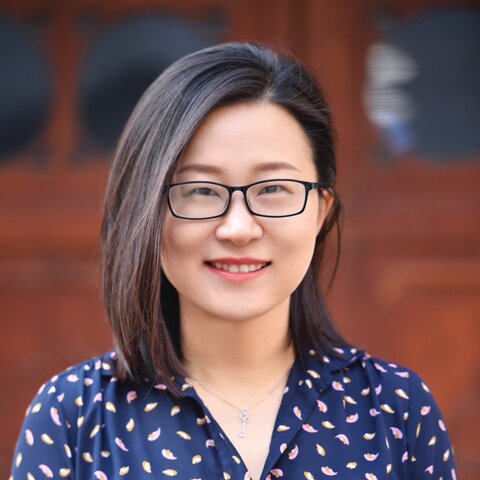
Affiliation: Beijing Normal University(北京师范大学)
Talk: The Early Neural Foundations of Language Development
报告题目: 语言发展的早期神经基础
Time: October 17, 11:10–12:10
Abstract
Language is a signature human capacity. Children exhibit an ability to learn language spontaneously and efficiently from birth, supporting their verbal communication, learning, and the development of abstract thought. Understanding its developmental mechanisms requires examining both the early neural foundations that support the protracted development of language abilities and the experiences that facilitate this process. In this talk, I synthesize evidence from neonatal and adult twin neuroimaging, longitudinal pediatric studies, and computational analyses of naturalistic comprehension to characterize the neural network mechanisms of language development. I will present converging evidence that a neural scaffold for long-term language development is already present in infancy, drawing on neonatal network organization, genetic contributions to corresponding connectivity patterns in adult twins, and longitudinal associations between infant neural network characteristics and later language and literacy abilities. I will then consider the role of postnatal experience in language development, examining how interpersonal interaction supports language acquisition and how the developing language network becomes increasingly sensitive to contextual predictability while attending to naturalistic conversations. Finally, I will briefly discuss our recent findings on how linguistic information relates to the formation of categorical semantic organization in preschoolers, illustrating the possible contributions of language to the development of richer, more abstract conceptual knowledge.
Biography
Dr. Xi Yu is an associate professor in the Faculty of Psychology at Beijing Normal University. She received her Ph.D. from the University of Hong Kong and completed postdoctoral training at Boston Children’s Hospital/Harvard Medical School. Her lab focuses on the neural and computational mechanisms underlying language and conceptual development. Combining longitudinal pediatric neuroimaging with cognitive and behavioral assessments and computational modeling, her team investigates when and how the developing brain learns linguistic regularities and organizes semantic knowledge through multimodal postnatal experiences, with translational implications for early screening and intervention. She has led projects funded by the National Natural Science Foundation of China, serves on branch committees of the Chinese Psychological Society and the Chinese Neuroscience Society, and is an Editorial Board Member of Communications Psychology.
摘要
语言是人类特有的高级认知功能。儿童从出生起便展现出高效、自主的语言学习能力,支持其言语交流、学习与抽象思维的发展。理解语言的发展机制,需要同时考察支撑其长期发展的早期神经基础,以及促进这一过程的经验因素。本报告将整合新生儿与成人双生子脑影像研究、儿童纵向追踪研究,以及自然情境下语言理解的计算分析结果,阐述语言发展的神经网络机制。我将首先呈现多方面证据,表明支持语言长期发展的神经支架在婴儿期已初步建立。这些证据包括新生儿脑网络的连接特征、成人双生子研究中相应连接模式的遗传效应,以及婴儿期神经网络特征与日后语言和读写能力之间的纵向关联。随后,我将探讨人际互动等出生后经验在语言习得中的作用,并介绍语言网络在加工自然对话时对语境可预测性的敏感性随年龄增长而增强的发现。最后,我将简要介绍我们近期关于学龄前儿童概念发展的研究发现,揭示语言信息与语义知识范畴化组织形成之间的联系,并探讨语言对抽象概念知识发展的潜在贡献。
个人简介
郁曦博士,北京师范大学心理学部副教授、博士生导师,曾在波士顿儿童医院/哈佛医学院从事博士后研究。长期从事儿童语言与概念发展的神经计算机制的研究。其课题组综合运用婴幼儿脑影像、纵向追踪、儿童友好的认知与行为测评以及计算建模等方法,研究儿童大脑如何从多模态经验中提取语言规律、构建概念知识,并探索相关成果在早期教育和临床筛查与干预中的应用。主持并参与多项国家自然科学基金项目,现担任中国心理学会普通心理和实验心理专业委员会委员、中国神经科学学会认知神经生物学分会组织委员等学术职务,同时担任Communications Psychology期刊编委。
Federico Rossano 费德里科·罗萨诺
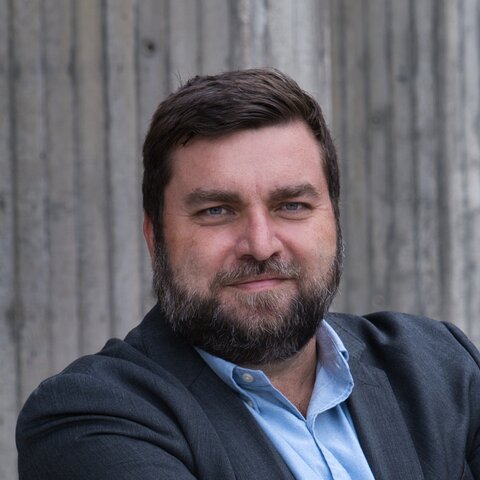
Affiliation: UC San Diego(加州大学圣地亚哥分校)
Talk: The data we have, the data we need to properly assess diverse intelligences
报告题目: 恰当评估多样化智能:已有的数据与所需的数据
Time: October 17, 13:40–14:40
Abstract
Comparative cognition seeks to understand the evolution of intelligence by studying how different species perceive, communicate, and interact with their worlds. Yet the field faces intertwined problems of replicability, generalizability, and ecological validity. Human participants are disproportionately drawn from WEIRD populations, while animal subjects often come from BIZARRE environments, raising questions about whether the individuals we study adequately represent their species or the conditions under which cognition evolved.
A related problem concerns what counts as evidence that a species possesses a cognitive ability. In developmental psychology, claims about an ability at a given age generally imply that it is reliably expressed by a substantial proportion of individuals (>50%). Comparative studies, however, often rely on small samples and group-level comparisons with chance. A group may perform above chance even when no individual does so reliably, while striking individual outliers may be overlooked when the group as a whole fails. Such practices can obscure meaningful variation in cognitive capacities.
In this talk, I argue that moving research beyond traditional laboratory settings is not merely methodologically desirable but scientifically essential. I describe how my lab combines large-scale citizen science, longitudinal behavioral datasets, computer vision, and field studies to examine cognition across species and contexts. Individual differences, life histories, motivation, and social relationships should not simply be treated as confounds: they can reveal how intelligence develops, operates, and evolves. More representative, ecologically grounded, and individually sensitive datasets are essential if we are to characterize diverse intelligences accurately.
Biography
Federico Rossano is an Associate Professor of Cognitive Science at the University of California, San Diego, where he directs the Comparative Cognition Lab. His research investigates the evolution and development of social cognition and communication across humans and other animals, combining experimental, observational, and computational approaches. His recent work uses large-scale citizen science, longitudinal behavioral datasets, and artificial intelligence to study animal behavior and intelligence at scales previously impossible, from communication in thousands of companion animals to automated tracking of primate behavior in naturalistic environments. Rossano received his PhD from Radboud University and the Max Planck Institute for Psycholinguistics and conducted postdoctoral research at the Max Planck Institute for Evolutionary Anthropology.
摘要
比较认知学旨在通过研究不同物种如何感知、交流以及与各自所处的世界互动,来理解智能的演化。然而,这一领域面临着可重复性、可推广性与生态效度等相互交织的问题。人类被试过多地来自WEIRD(西方、受过教育、工业化、富裕、民主)人群,而动物被试则常常来自BIZARRE(贫瘠、机构化、动物园及其他罕见饲养)环境,这使人质疑:我们所研究的个体是否足以代表其所属物种,又是否足以代表认知得以演化的条件。
与此相关的另一个问题是:什么才能算作某一物种具备某种认知能力的证据?在发展心理学中,若声称某种能力在特定年龄已经具备,通常意味着相当比例(>50%)的个体能够稳定地表现出这种能力。然而,比较研究往往依赖小样本,以及在群体层面与随机水平进行的比较。即便没有任何个体能够稳定地高于随机水平,群体整体仍可能表现出高于随机水平的成绩;而当群体整体未能通过测试时,表现突出的个别离群个体又可能被忽视。这类做法可能掩盖认知能力中有意义的变异。
在本次报告中,我将论证:让研究走出传统实验室环境,不仅在方法论上是可取的,在科学上更是必不可少的。我将介绍我的实验室如何结合大规模公民科学、纵向行为数据集、计算机视觉与实地研究,考察跨物种、跨情境的认知。个体差异、生活史、动机与社会关系不应仅仅被视为混杂因素:它们能够揭示智能如何发展、如何运作以及如何演化。若要准确刻画多样化智能,更具代表性、更扎根于生态情境、对个体差异更为敏感的数据集至关重要。
个人简介
费德里科·罗萨诺,加州大学圣地亚哥分校认知科学系副教授,并担任该校比较认知实验室主任。他的研究结合实验、观察与计算方法,探究人类及其他动物社会认知与交流的演化和发展。他近期的工作借助大规模公民科学、纵向行为数据集和人工智能,在以往无法企及的规模上研究动物行为与智能,研究范围从数以千计伴侣动物的交流,到自然情境下灵长类动物行为的自动化追踪。罗萨诺于拉德堡德大学和马克斯·普朗克心理语言学研究所获得博士学位,并在马克斯·普朗克进化人类学研究所从事博士后研究。
Anne E. C. White 安妮·怀特
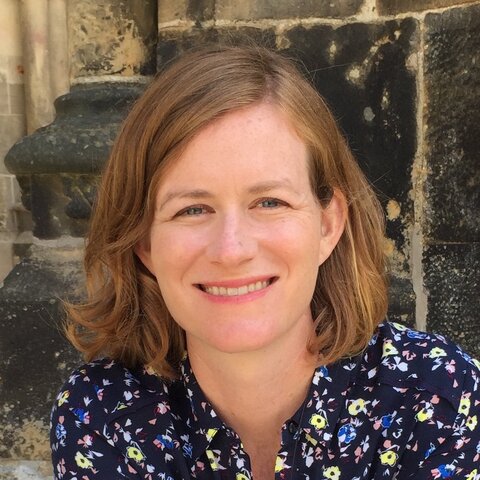
Affiliation: UC San Diego(加州大学圣地亚哥分校)
Talk: A Conversation Analytic Approach to Doctor-Patient Communication: Navigating Challenging Clinical Discussions
报告题目: 医患沟通的会话分析路径:应对棘手的临床对话
Time: October 17, 14:40–15:40
Abstract
The quality of healthcare communication can impact both patient experiences and outcomes. This talk highlights aspects of communication that can be systematically examined using Conversation Analysis (CA) and provides guidance about how researchers can incorporate CA into healthcare studies. CA is a qualitative method for studying naturally occurring communication by analyzing recurrent, systematic practices of verbal and nonverbal behavior. CA involves examining audio- or video-recorded conversations and their transcriptions to identify practices speakers use to communicate and interpret behavior. I will explain what distinguishes CA from other methods that study communication and highlight three accessible CA approaches that researchers can use in their research design, analysis, or implementation of communication interventions. Specifically, these approaches focus on how talk is produced (specific words, framing, and syntax), by whom, and when it occurs in the conversation. I will then discuss conversation analytic medical studies that highlight difficult social actions physicians are routinely faced with during patient visits including 1) correcting patient misconceptions, and 2) navigating their own self-disclosures when they share the same condition as the patient.
Biography
Dr. Anne E. C. White is an assistant professor in the School of Public Health at the University of California San Diego. She received her AB in Sociology from Princeton University and PhD in Sociology from the University of California Los Angeles. Her research focuses on doctor-patient communication and its impact on participant experiences and health outcomes. She uses a mixed-method approach combining Conversation Analysis, ethnography, qualitative interviews and statistical analysis. Dr. White was a postdoctoral fellow at the University of California Davis Medical Center and the Sanford Institute for Empathy and Compassion (at UCSD) where she studied how chronic pain patients negotiate opioid prescriptions during primary care visits. As a medical sociologist, she is particularly interested in rural healthcare settings and inequities in access to medical care. She has published in the Journal of General Internal Medicine, Cancer Medicine, Health Communication, Social Science and Medicine, Qualitative Health Research, Patient Education and Counseling, BMC Family Practice, Language in Society, Language and Communication, and Social Psychology Quarterly.
摘要
医疗沟通的质量既会影响患者的就医体验,也会影响其健康结局。在本次报告中,我将重点介绍可借助会话分析(Conversation Analysis,CA)进行系统考察的沟通层面,并就研究者如何将会话分析纳入医疗健康研究提供指导。会话分析是一种质性研究方法,它通过分析言语与非言语行为中反复出现的系统性实践,来研究自然发生的沟通。会话分析需要考察录音或录像记录下的对话及其转写文本,以识别说话者在沟通和解读行为时所采用的实践。我将阐明会话分析与其他沟通研究方法的区别所在,并重点介绍三种易于上手的会话分析路径,研究者可将其用于研究设计、分析或沟通干预的实施。具体而言,这些路径分别关注话语是如何产出的(具体用词、表述框架与句法)、由谁说出,以及出现在对话中的什么时机。随后,我将讨论若干会话分析取向的医学研究,这些研究揭示了医生在接诊过程中经常面临的棘手社会行为,包括:(1)纠正患者的错误认知;(2)当自己与患者患有相同疾病时,如何把握自我表露。
个人简介
安妮·怀特,加州大学圣地亚哥分校公共卫生学院助理教授。她在普林斯顿大学获得社会学学士学位,在加州大学洛杉矶分校获得社会学博士学位。她的研究聚焦于医患沟通及其对参与者体验与健康结局的影响,采用混合研究方法,综合运用会话分析、民族志、质性访谈和统计分析。怀特曾在加州大学戴维斯分校医学中心及加州大学圣地亚哥分校桑福德共情与关怀研究所担任博士后研究员,其间研究慢性疼痛患者在初级保健就诊中如何就阿片类药物处方进行协商。作为一名医学社会学家,她尤其关注农村医疗环境以及医疗服务可及性方面的不平等问题。她曾在Journal of General Internal Medicine、Cancer Medicine、Health Communication、Social Science and Medicine、Qualitative Health Research、Patient Education and Counseling、BMC Family Practice、Language in Society、Language and Communication以及Social Psychology Quarterly上发表论文。
Yin Wang 汪寅
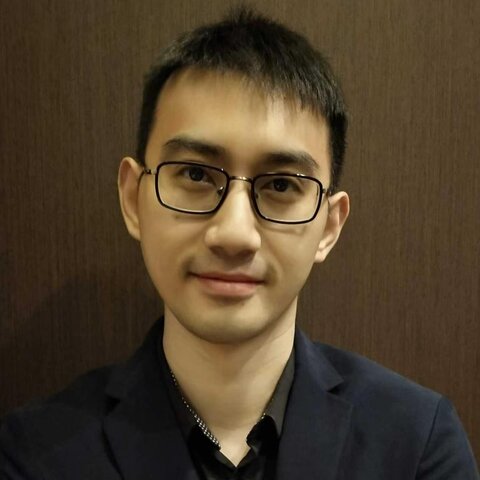
Affiliation: Beijing Normal University(北京师范大学)
Talk: The Hidden Architecture of the Social Brain
报告题目: 社会脑的隐秘架构
Time: October 17, 16:10–17:10
Abstract
Everyday social life confronts us with extraordinary complexity: we recognize individuals, interpret intentions, navigate relationships, and judge right and wrong. What organizing principles allow the human brain to make this complexity manageable? In this talk, I address this question at three levels. First, I examine how the brain coordinates social information processing, revealing flexible access to distributed person knowledge, differentiated pathways for face processing, and an orderly arrangement of emotion-, value-, and social-inference-related functional motifs in the ventromedial prefrontal cortex. Second, I explore how the mind organizes social knowledge, showing how the diversity of human relationships and moral concepts can be captured within compact representational spaces. Third, I investigate how social abilities form structured systems, drawing on research into bonding, processing, and coping in healthy adults alongside a large-scale synthesis of social functioning in autism. Together, these studies motivate an emerging account of social complexity grounded in neural coordination, representational compression, and interdependence among abilities. They also raise a central challenge: how do these forms of organization work together to support the flexibility of human social life?
Biography
Dr. Yin Wang is a Professor at Beijing Normal University and a Principal Investigator at the IDG/McGovern Institute for Brain Research. He completed his Ph.D. degree in Psychology at the University of Nottingham, and postdoctoral training at New York University and Temple University. Dr. Wang’s lab aims to uncover the cognitive and brain mechanisms which allow us to interact with our social world, and also to understand how these mechanisms are compromised in people with social difficulties. He uses a variety of methods including psychophysics, eye-tracking, online experiments, smartphone apps, movie-watching, network analysis, computational modelling, and multimodal neuroimaging techniques.
摘要
日常社会生活使我们面对极其复杂的局面:我们需要识别个体、解读意图、处理人际关系、判断是非对错。人脑依靠怎样的组织原则,使这种复杂性变得可以驾驭?在本次报告中,我将从三个层面探讨这一问题。第一,我将考察大脑如何协调社会信息加工,揭示大脑对分布式人物知识的灵活提取、面孔加工的分化通路,以及腹内侧前额叶皮层中与情绪、价值和社会推理相关的功能模体的有序排布。第二,我将探讨心智如何组织社会知识,展示人际关系与道德概念的多样性如何能够在紧凑的表征空间中得到刻画。第三,我将研究社会能力如何构成结构化的系统,相关工作既包括对健康成年人在联结(bonding)、加工(processing)与应对(coping)方面的研究,也包括对孤独症社会功能的大规模综合分析。这些研究共同推动形成了一种关于社会复杂性的新兴理论解释,其基础在于神经协调、表征压缩以及能力之间的相互依存。同时,这些研究也提出了一个核心挑战:这些不同形式的组织方式如何协同运作,以支撑人类社会生活的灵活性?
个人简介
汪寅,北京师范大学教授,IDG/麦戈文脑科学研究院PI。他在诺丁汉大学获得心理学博士学位,随后在纽约大学和天普大学完成博士后训练。汪寅课题组致力于揭示使我们得以与社会世界互动的认知与脑机制,并探究这些机制在存在社交困难的人群中如何受损。他综合运用多种研究方法,包括心理物理学、眼动追踪、在线实验、智能手机应用、观影范式、网络分析、计算建模以及多模态神经影像技术。
Quanying Liu 刘泉影

Affiliation: SUSTech(南方科技大学)
Talk: Brain-Computer Interface Foundation Models
报告题目: 脑机接口基座大模型
Time: October 17, 17:10–18:10
Abstract
Brain-computer interfaces (BCIs) are at a critical breakthrough stage, expanding from task-specific vertical applications toward general-purpose scenarios such as human-agent and human-robot interaction. Current BCIs face two major bottlenecks: too little data and models that are too small. High-quality brain data are difficult to acquire and costly to annotate, and conventional decoding models are typically built for a few subjects and specific tasks, severely constraining model performance. To address these bottlenecks, Omni-Intelligence (Shenzhen) has proposed a BCI foundation model that builds a unified neural representation framework pretrained on large-scale, multi-source data, forming an end-to-end technical pipeline of pretraining, post-training, and individualized adaptation. We have built a brain foundation model with one billion parameters that integrates multi-source, multimodal, and multi-task brain data to learn general neural representations reusable across subjects and downstream tasks. Experiments show that model performance improves steadily as data scale and parameter count increase, providing preliminary evidence that the model follows scaling laws and demonstrating its potential for continued scaling. This work lays a technical foundation for moving BCIs from specialized systems to general-purpose platforms.
Biography
Quanying Liu is a tenured Associate Professor and Principal Investigator in the Department of Biomedical Engineering at the Southern University of Science and Technology (SUSTech), and the founder of Omni-Intelligence (Shenzhen). Liu received bachelor’s and master’s degrees from the School of Information Science and Engineering at Lanzhou University and a PhD from ETH Zurich, Switzerland, and then conducted postdoctoral research at the California Institute of Technology (Caltech), USA. Returning to China in 2019, Liu founded the Neural Computing and Control Laboratory (NCC Lab) at SUSTech. Liu’s research focuses on BCI foundation models, human-agent interaction, and related areas, advancing bidirectional “read-out/write-in” BCI technologies and offering new paradigms for decoding brain function and intervening in neurological disorders. As first or corresponding author, Liu has published more than 60 papers in journals including Nature Biomedical Engineering, Nature Methods, and National Science Review (cover article), and at leading machine learning conferences such as NeurIPS, ICML, ICLR, and AAAI. Liu has also published the textbook Human Brain Intelligence and Artificial Intelligence (in Chinese; Tsinghua University Press), named one of Tsinghua University Press’s 2025 Books of the Year. Liu’s publicly released EEG datasets have been downloaded more than 270,000 times. Liu received the 2025 China Brain-Machine Intelligence Science Rising Star Award and was named a 2026 Pujiang Young Scholar.
摘要
脑机接口(BCI)正处在从特定任务垂类应用场景向人-智能体/机器人交互等通用场景拓展的关键突破期。当前BCI面临“数据太少”与“模型太小”两大瓶颈:高质量大脑数据获取困难且标注成本高昂,传统解码模型多针对少数被试与特定任务,严重制约模型性能。为此,深圳全域智能公司提出脑机接口基座模型,构建大规模多源数据预训练的统一神经表征体系,形成“预训练—后训练—个体化适配”的技术闭环。我们构建了包含10亿参数的大脑基座模型,融合多源、多模态、多任务的大脑数据,学习跨被试、跨下游任务可复用的通用神经表征。实验结果表明,模型性能随数据规模与参数量的增加稳定提升,初步验证了其遵循规模定律(Scaling Law),并展现了模型持续扩展的潜力,为BCI从专用系统走向通用平台奠定了技术基础。
个人简介
刘泉影,南方科技大学生物医学工程系长聘副教授,PI。深圳全域智能科技有限公司创始人。刘泉影于兰州大学信息学院获学士/硕士学位,于瑞士苏黎世联邦理工学院获博士学位,其后在美国加州理工学院从事博士后研究工作。2019年回国,在南方科技大学创立神经计算与控制实验室(NCC lab),主要研究脑机接口基座大模型、人-智能体交互等工作,推动“读出-写入”双向脑机接口技术的发展,为解码脑功能和干预神经疾病提供全新范式,以一作/通讯作者在Nature Biomedical Engineering、Nature Methods、National Science Review(封面)等期刊,NeurIPS、ICML、ICLR、AAAI等机器学习顶会上发表论文60余篇,出版教材《人脑智能与人工智能》(荣获清华大学出版社2025年度好书)。其发布的脑电数据集被下载逾27万次。获2025中国脑机智能科学新星奖、2026年浦江青年学者。
Hakwan Lau 刘克顽
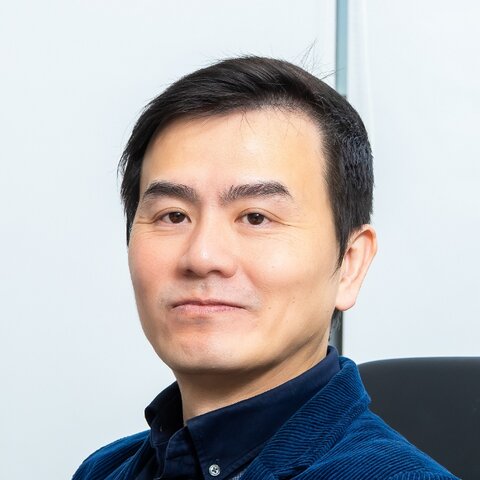
Affiliation: IBS CNIR / Sungkyunkwan University(成均馆大学)
Talk: Conscious Perception & the Prefrontal Cortex
报告题目: 意识知觉与前额叶皮层
Time: October 18, 09:00–10:00
Abstract
The granular lateral prefrontal cortex is generally considered to be important for high-level cognition. But what role may it play, if any, in perception? The sophistication of human perception exceeds feedforward ‘deep’ neural networks in current AI, in large part because our perceptual processes are both monitored and controlled by the higher-order processes of perceptual metacognition. These include not only the generation of explicit confidence, but also implicit (i.e. automatic) judgments of reality versus imagination, of subjective similarity between stimuli, the deployment of attention, and adjustments of readout mechanisms that are sensitive to changes in noise level and representational drifts of early sensory content. It is difficult to imagine what subjective perception would be like without these processes. Perhaps, in that scenario, there would be ’nothing it is like’ to perceive, i.e. perception without perceptual metacognition, broadly construed as above, may well be best conceptualized as nonconscious, akin to blindsight. Because these processes likely depend on the granular lateral prefrontal cortex, for which there is no homologue in rodents, this raises the intriguing possibility of the uniqueness of human/primate perceptual experiences.
Biography
Hakwan Lau is a director at the Institute for Basic Science (IBS) in South Korea. In this role he leads a nationally funded neuroimaging center, combining human and animal neuroscience, psychophysics, and computational modelling to study perception, metacognition, and their clinical applications, through the development of a hemodynamics (fMRI)-based brain-computer interface (BCI). Lau earned his undergraduate degree at the University of Hong Kong, his DPhil at Oxford, and completed postdoctoral training at University College London. Previously, he also held positions at Columbia, the University of Hong Kong, RIKEN Center for Brain Science, and the University of California, Los Angeles (UCLA, where he was a tenured full professor). He is the author of the open-access academic monograph In Consciousness We Trust.
摘要
颗粒型外侧前额叶皮层(granular lateral prefrontal cortex)通常被认为对高级认知十分重要。但它在知觉中是否发挥作用?若有,又是怎样的作用?人类知觉的精妙程度超越了当前人工智能中的前馈“深度”神经网络,这在很大程度上是因为我们的知觉过程既受到知觉元认知这一系列高阶过程的监测,也受到其控制。这些过程不仅包括外显信心的生成,还包括对现实与想象之别、对刺激间主观相似性的内隐(即自动)判断,注意的调配,以及对噪声水平变化和早期感觉内容的表征漂移敏感的读出机制调整。很难想象,倘若缺少这些过程,主观知觉会是什么样子。或许在那种情况下,知觉将没有任何“感受起来像什么”的体验(nothing it is like);也就是说,若知觉缺乏上述广义的知觉元认知,它很可能最宜被视为无意识的,类似于盲视。由于这些过程很可能依赖于颗粒型外侧前额叶皮层,而啮齿类动物并没有与之同源的脑区,这便引出了一种耐人寻味的可能性:人类及灵长类动物的知觉体验或许是独一无二的。
个人简介
刘克顽,韩国基础科学研究院(IBS)中心主任。他领导着一个由国家资助的神经影像研究中心,结合人类与动物神经科学、心理物理学和计算建模,通过开发基于血流动力学(fMRI)的脑机接口(BCI),研究知觉、元认知及其临床应用。他本科毕业于香港大学,在牛津大学获得博士学位,并在伦敦大学学院完成博士后训练。此前,他还曾任职于哥伦比亚大学、香港大学、日本理化学研究所脑科学中心以及加州大学洛杉矶分校(UCLA),并曾在UCLA担任终身正教授。他著有开放获取学术专著In Consciousness We Trust(繁体中文版《以意识之名》)。
Ka-Yuet Liu 廖加悦

Affiliation: Sungkyunkwan University School of Medicine / IBS CNIR(成均馆大学医学院)
Talk: From Social Networks to Neural Circuits: How Brains and People Assign Value
报告题目: 从社会网络到神经环路:大脑与人如何赋予价值
Time: October 18, 10:00–11:00
Abstract
How do brains sort the good from the bad? In fruit flies, we recorded virtually every neuron in a brain region that evaluates smells and simulated the region’s complete wiring diagram. Bad smells are flagged by a simple feedforward design, in which input channels converge. Good smells require more: local inhibition that keeps responses in check. Reducing that inhibition shifted flies toward avoidance. Value, in other words, is computed by the network, not merely read off the input. Sociology makes the same argument about people. Using whole-population records, we showed that the same attribute can raise or lower suicide risk depending on one’s neighbors, and, in a simulation of millions of children’s actual locations, that the rise in autism diagnoses disappears without interaction at schools and malls. Ongoing work brings both scales together, asking how social isolation and brain structure relate to long COVID, and how aligned brain networks reveal individual differences. Finally, because value has no correct answer, I will argue that AI models of human value should reproduce how people actually judge, inconsistencies included, rather than maximize performance.
Biography
Ka-Yuet Liu is a Professor in the School of Medicine at Sungkyunkwan University. She studies how social influence and context shape health. She worked at the RIKEN Center for Brain Science in Japan and is currently an affiliate of the IBS Center for Neuroscience Imaging Research in Korea. She received her PhD in Sociology from the University of Oxford, was a postdoctoral scholar at Columbia University, and previously served as a tenured Associate Professor of Sociology at UCLA.
摘要
大脑如何区分好与坏?我们在果蝇身上记录了一个负责评估气味的脑区中几乎每一个神经元,并对该脑区的完整连接图谱进行了仿真。坏气味由一种简单的前馈结构标记,其中多个输入通道发生汇聚。好气味则需要更多机制:用以控制反应强度的局部抑制。削弱这种抑制后,果蝇的行为偏向回避。换言之,价值是由网络计算出来的,而不只是从输入中直接读出。社会学对人也提出了同样的论点。我们利用全人口记录数据表明,同一特征既可能升高、也可能降低自杀风险,这取决于一个人的邻居;我们还在一项基于数百万儿童真实位置的仿真中表明,如果没有学校和商场中的互动,孤独症诊断率的上升就会消失。正在进行的工作将这两个尺度结合起来,探究社会隔离和大脑结构与长新冠(long COVID)有何关联,以及对齐后的脑网络如何揭示个体差异。最后,由于价值并无正确答案,我将论证:刻画人类价值的人工智能模型应当再现人们实际进行判断的方式(包括其中的不一致之处),而不是追求性能最大化。
个人简介
廖加悦,成均馆大学医学院教授。她研究社会影响与情境如何塑造健康。她曾任职于日本理化学研究所脑科学中心,目前为韩国基础科学研究院(IBS)神经科学影像研究中心附属研究员。她在牛津大学获得社会学博士学位,曾在哥伦比亚大学从事博士后研究,此前还曾任加州大学洛杉矶分校社会学终身副教授。
Sheng He 何生
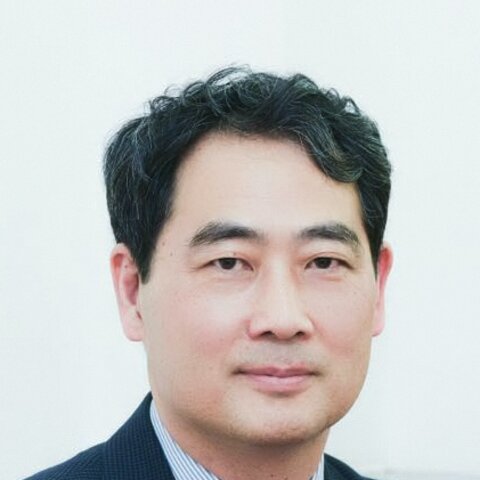
Affiliation: Institute of Biophysics, Chinese Academy of Sciences(中国科学院生物物理研究所)
Talk: Feedback Processing, Attention, and Visual Awareness
报告题目: 反馈加工、注意与视觉意识
Time: October 18, 11:30–12:00
Abstract
How does the brain construct coherent visual experience from incomplete or conflicting sensory inputs? I will present experimental findings on the interplay between feedforward and feedback processing, attention, and awareness. Feedback signals are task dependent, temporally flexible, and differentially organized across cortical layers. As an active sampling mechanism, attention helps resolve conflicting visual inputs and contributes to the emergence of visual awareness. I will also discuss the role of intact primary visual cortex (V1) in the expression of feedback signals that support visual awareness.
Biography
Sheng He is the Deputy Academic Director and a Principal Investigator at the Institute of Biophysics, Chinese Academy of Sciences. He received his Ph.D. in Psychology from UC San Diego and completed postdoctoral training at Harvard University. Before returning to China, he was a professor in the Department of Psychology at the University of Minnesota. His research in human cognitive neuroscience focuses particularly on visual attention and consciousness, combining psychophysics, neuroimaging, and noninvasive brain stimulation. He has led major research projects in both the United States and China and has received honors including the Alfred P. Sloan Research Fellowship and the McKnight Land-Grant Professorship.
摘要
大脑如何从不完整或相互冲突的感觉输入中构建出连贯的视觉体验?我将介绍有关前馈与反馈加工、注意和意识之间相互作用的实验发现。反馈信号具有任务依赖性和时间上的灵活性,并且在皮层各层(cortical layers)中的组织方式各不相同。注意作为一种主动采样(active sampling)机制,有助于化解相互冲突的视觉输入,并参与视觉意识的产生。此外,我还将探讨完好的初级视觉皮层(V1)在支持视觉意识的反馈信号表达中所发挥的作用。
个人简介
何生,中国科学院生物物理研究所学术副所长、研究组长。他在加州大学圣地亚哥分校获得心理学博士学位,并在哈佛大学完成博士后训练;回国前曾任明尼苏达大学心理学系教授。他从事人类认知神经科学研究,尤其关注视觉注意与意识,综合运用心理物理学、神经影像和无创脑刺激方法。他曾在中美两国主持重大科研项目,并获斯隆研究奖(Alfred P. Sloan Research Fellowship)、McKnight Land-Grant Professorship等荣誉。
Hosts and organizing committee
Hosts
- Center on Frontiers of Computing Studies, Peking University(北京大学前沿计算研究中心)
- School of Psychological and Cognitive Sciences, Peking University(北京大学心理与认知科学学院)
- AI Center for International Cooperation and Disciplinary Innovation(人工智能创新引智基地)
- State Key Laboratory of General Artificial Intelligence(跨媒体通用人工智能全国重点实验室)
Co-organizers
- IDG/McGovern Institute for Brain Research at Peking University(北京大学IDG麦戈文脑科学研究所)
- Beijing Key Laboratory of Brain-Computer Interfaces and Mental Health Regulation(脑机接口与心理健康调控北京市重点实验室)
- Branch of Cognitive Neurobiology, Chinese Neuroscience Society(中国神经科学学会认知神经生物学专委会)
Conference Chairs
- Song-Chun Zhu 朱松纯 - Chair Professor, Peking University; Director, State Key Laboratory of General Artificial Intelligence
- Yizhou Wang 王亦洲 - Endowed Boya Professor, Peking University; Vice Director, Center on Frontiers of Computing Studies, Peking University
- Yanchao Bi 毕彦超 - Endowed Boya Professor, Peking University; Dean, School of Psychological and Cognitive Sciences, Peking University
Organizing Committee Chairs
- Yixin Zhu 朱毅鑫 - Assistant Professor, School of Psychological and Cognitive Sciences and Institute for Artificial Intelligence, Peking University
- Yujia Peng 彭玉佳 - Assistant Professor, School of Psychological and Cognitive Sciences, Peking University
- Huihui Zhang 张惠惠 - Research Assistant Professor, Institute for Artificial Intelligence, Peking University
Organizing Committee Members
- Yunli Yang 杨韫利 - Center on Frontiers of Computing Studies, Peking University
- Shuang Wu 吴双 - Center on Frontiers of Computing Studies, Peking University
- Hailu Yang 杨海璐 - Institute for Artificial Intelligence, Peking University
Original materials
- Program (PDF): the original two-page program in English and Chinese, with session times, speakers, affiliations, and venue.
- Conference handbook (PDF): the workshop introduction, full program, speaker abstracts and biographies, organizing committee, and hosts and co-organizers, in English and Chinese.
Both PDFs are the original documents prepared for the 2026 workshop. The overview, talk titles, abstracts, biographies, hosts, and organizing committee on this page follow the handbook.